Anti-depressants have saved lives, maybe even mine, so now they want to ban them
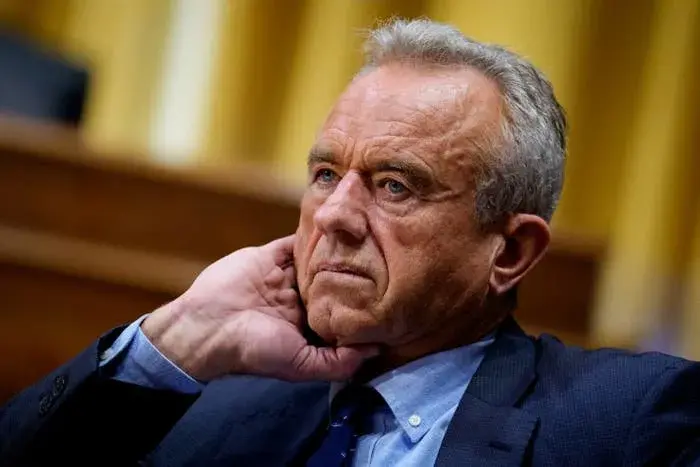
The greatest health danger to America
Remember when the Kennedy name used to bring pride to the American people instead of wrath and despondency? The names of Jack and Bobby Kennedy were very important to American progress from the 1950s to 1970s.
How far that hallowed name has fallen. In fact, it is despised in medical circles, and Robert F. Kennedy Jr. has even been called an outcast by his siblings and other relatives. He has absolutely no medical background, yet somehow is in a position of leadership in Health and Human Services.
Here is the latest nonsense being uttered by those people,
U.S. health department officials last week explored whether they could ban certain drugs in a widely prescribed class of antidepressants as Health Secretary Robert F. Kennedy Jr. prepared to roll out a plan to reduce their use, according to two people familiar with the discussions.
Their interest centered on specific treatments within a class known as selective serotonin reuptake inhibitors, or SSRIs, such as Zoloft, Prozac and Lexapro, which have been available in the U.S. for decades, one of the people said. The sources did not say which drugs were being examined for restrictions or how far the inquiries about them had advanced.
Yasmeen Abutaleb and Bo Erickson, “Kennedy's health officials explored US ban of some widely used antidepressants,” Reuters, May 8, 2026
However, studies in the 21st Century in America have shown that anti-depressants actually save lives.
Reducing the suicide rate
One of the major concerns in America right now is the increasing suicide rate. Medical experts are alarmed because the medications can help those who are suffering from mental health episodes,
A [2006] UCLA study suggests that the use of antidepressants to treat depression has saved thousands of lives, despite the concern about a possible link between suicide risk and the class of drugs called selective serotonin reuptake inhibitors (SSRI).
The lead author of the study is Dr. Julio Licinio, the new chairman of the Department of Psychiatry and Behavioral Sciences at the University of Miami Leonard M. Miller School of Medicine.
The data show the U.S. suicide rate held fairly steady for 15 years prior to the introduction of fluoxetine, then dropped steadily over 14 years as sales of the antidepressant rose. The research team found the strongest effect among women.
Mathematical modeling of probable suicide rates from 1988 to 2002, based on pre-1988 data, suggests a cumulative decrease in expected suicide mortality of 33,600 people since the introduction of the antidepressant.
"Our findings certainly suggest that the introduction of SSRIs has contributed to reduction of suicide rates in the United States," Licinio said.
"New Study Suggests Antidepressants Save Lives." ScienceDaily, 13 June 2006. www.sciencedaily.com/releases/2006/06/060613072733.htm.
Health officials have warned that the move by the government is dangerous,
About one in six U.S. adults reported currently taking antidepressant medications, according to a 2026 study in the medical journal BMJ Mental Health, with SSRI drugs, which are widely available in generic form, the most common type. The American Psychiatric Association considers SSRIs a first option, evidence-based treatment for depression.
"There are a lot of prescriptions because there are a lot of folks with illnesses that can respond to these medications," including depression and several anxiety disorders, said Dr. J. John Mann of the New York State Psychiatric Institute. "Restricting use of these medications is not justifiable medically."
Yasmeen Abutaleb and Bo Erickson, Reuters, May 8, 2026
Antidepressants have positive effects on people
One woman who is active in the medical field explains how the SSRI drugs helped her,
I wasn’t resistant to antidepressants per se, but I didn’t seek them out because I feared that they might make me feel numb or otherwise less like myself. I couldn’t have been more wrong.
They were not a crutch, or a replacement for doing the hard work of managing depression and anxiety and figuring out how to do things like compartmentalize and set boundaries. But after trial and error amid several medication combinations, I regained a sense of self and purpose. I could engage in that therapeutic work and my relationships. I could devote more time to my career writing and teaching on health policy.
This is why Kennedy’s initiatives to rein in the prescribing of selective serotonin reuptake inhibitors, or SSRIs, are so dangerous. All too often, the challenge facing Americans struggling with mental health isn’t overprescription but insurance barriers, along with stigma around treatment that has been addressed over the years but which the administration’s approach risks exacerbating.
Miranda Yaver, “RFK Jr.’s dangerous crusade against antidepressants,”
MS Now, May 06, 2026
My battle because of a failed diagnosis
I just repeated this story to some friends today. When I was 15, I became so ill that I had to drop out of my sophomore year of high school. Doctors failed to diagnose it, but eventually, they found a duodenal ulcer in my intestines.
They were able to treat that and it disappeared, but they could not diagnose the cause of it. They blamed it on stress and gave me librium to help me sleep, but that had dreadful consequences. The diagnosis was not made until decades later when a doctor in Minnesota told me, “You have clinical depression.”
He prescribed Sinequan, now called Doxepin, and it was like a miracle drug. It changed my life in such a positive way. I took it for about 30 years, then weaned myself off of it about ten years ago. I no longer need it.
Sinequan is not one of the SSRIs like Prozac, Lexapro, or Zoloft. It is a tricyclic antidepressant (TCA). It works on the central nervous system (CNS) to increase levels of certain chemicals in the brain.
All I know is that it worked for me.
Overprescribed?
There is a danger that the antidepressants are overprescribed, but none that it is a national danger.
For some, psychological treatment can help without the medication, but that does not mean that the medications should be banned like children’s books are pulled from library shelves,
To be sure, these medications are not appropriate for everyone. For many people, therapeutic approaches such as cognitive behavioral therapy have proven highly effective, whether in lieu of or in addition to medication. That is why there are already prescribing guardrails in place: Trained providers evaluate their patient and the clinical appropriateness of a given medication, and in the case of brand drugs or otherwise costly medications, prior authorization (or required preapproval by a health insurer) is often applied.
It is a worthy goal to ensure that prescribing is focused on those who are likely to derive the greatest benefit, but Kennedy’s recommendations unnecessarily stigmatize SSRIs, and risk overcorrection and the under-prescription of medically necessary care. While there has been growing openness in discussing mental health, 35% of Americans said in a Harris/APA poll that they would view someone differently if they learned that the individual had a mental health condition. Seeing the highest-ranking official in the Department of Health and Human Services characterize effective antidepressants as something to be avoided and “harder to quit than heroin” is bound to increase that number.
Miranda Yaver, MS Now, May 06, 2026
Having a heroin addict, one who is also an anti-vaxxer, in that position does not help people's attitudes toward mental health.
Government should work to help people not destroy them.
Not this one.


Comments